
Sketch of Archilife Study Tour, December 2025


|
2025年12月份見識之旅縮影 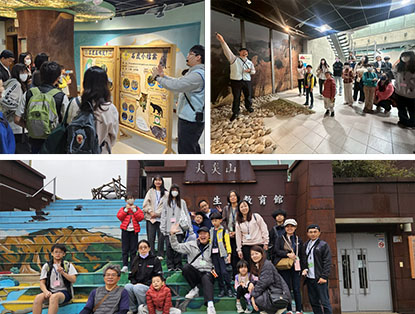 2025年12月20日由呂明澐小姐帶領19位祐生見習生及其家長們,至苗栗進行火炎山生態暨薑麻園體驗之旅。首站來到三義的火炎山生態教育館,眾人先觀賞《大地的孩子-小石虎返家之路》,影片記錄一對出生於南投集集鎮的石虎寶寶,自誕生、成長到最終野放的歷程,再由導覽人員帶領大家來到常設展區,透過展板、標本與互動問答,讓見習生從身體斑紋、耳背圖樣等特徵,認識台灣唯一現存的原生貓科動物;石虎早年於中西部淺山十分常見,晚近因人為開發導致森林遭到破壞,逐漸縮減其生存空間,火炎山因保有相對完整的森林與荒地,成為少數能提供石虎穩定棲息條件的區域之一,然而棲地零碎化與人為干擾問題依然存在,凸顯石虎保育是一項長期且具挑戰性的工作。隨後,導覽人員說明火炎山由於礫岩結構鬆散,長期受雨水沖刷侵蝕,形成侵蝕溝與沖積扇等特殊地形,並使山體至今仍處於持續崩塌狀態,因此透過自然保留區的劃設,以兼顧民眾安全並防止環境遭到過度開發。教育館現場亦設置來自保留區的礫石及地層完整剖面,見習生們透過實際踏行與觀察,加深對火炎山地形與地質特色的理解。 2025年12月20日由呂明澐小姐帶領19位祐生見習生及其家長們,至苗栗進行火炎山生態暨薑麻園體驗之旅。首站來到三義的火炎山生態教育館,眾人先觀賞《大地的孩子-小石虎返家之路》,影片記錄一對出生於南投集集鎮的石虎寶寶,自誕生、成長到最終野放的歷程,再由導覽人員帶領大家來到常設展區,透過展板、標本與互動問答,讓見習生從身體斑紋、耳背圖樣等特徵,認識台灣唯一現存的原生貓科動物;石虎早年於中西部淺山十分常見,晚近因人為開發導致森林遭到破壞,逐漸縮減其生存空間,火炎山因保有相對完整的森林與荒地,成為少數能提供石虎穩定棲息條件的區域之一,然而棲地零碎化與人為干擾問題依然存在,凸顯石虎保育是一項長期且具挑戰性的工作。隨後,導覽人員說明火炎山由於礫岩結構鬆散,長期受雨水沖刷侵蝕,形成侵蝕溝與沖積扇等特殊地形,並使山體至今仍處於持續崩塌狀態,因此透過自然保留區的劃設,以兼顧民眾安全並防止環境遭到過度開發。教育館現場亦設置來自保留區的礫石及地層完整剖面,見習生們透過實際踏行與觀察,加深對火炎山地形與地質特色的理解。 For the study tour of December 20, 2025, Ms. Lu Ming-yun led 19 ARF interns and their parents on a trip to explore the Huoyan Mountain ecosystem and Ginger Garden in Miaoli. At the first stop, the Huoyan Mountain Ecology Museum in Sanyi, everyone watched the film Children of the Earth: The Leopard Cat Cubs' Journey Home, which documents the birth and growth of a pair of leopard cats and their eventual release into the wild. At the exhibition area, interns learned about Taiwan's only surviving native feline through exhibition boards, specimens, and interactive Q&A. Long ago, leopard cats were commonly seen in the foothills of central-western Taiwan, but their habitat has gradually shrunk due to deforestation. Huoyan Mountain is one of the few areas that provide stable habitat conditions due to its relatively intact forest and wilderness. However, leopard cat conservation is still a long-term and challenging task with continuing problems of habitat fragmentation and human interference. Because of its conglomerate structure and long-term rain erosion, gullies and alluvial fans on Huoyan Mountain lead to ongoing slope collapse. Its designation as a nature conservation site helps to ensure public safety and prevent overdevelopment. By walking on gravel samples taken from the mountain and observing the cross-section of the terrain, interns gained a deeper understanding of the mountain terrain and its geological characteristics. 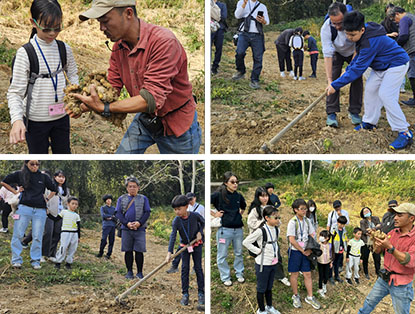 下午前往位於大湖的薑麻園休閒農業區參訪,此地先民以種植、販售生薑為主要生計,遂取客語中「生薑」之發音「薑麻」作為地名由來。眾人進行挖薑體驗前,薑田園主說明薑的生長與採收時序:一般於年末種植,隔年中秋前後為嫩薑採收期;中秋過後至冬至前採收者為中薑;老薑則須待冬至後方可採收,若老薑未及時採收,植株將停止肥大並開始發芽,孕育新一代薑株。園主亦補充,薑具高度吸收土壤養分之特性,同一農地於種植後須休耕約六至九年始得再行栽種,以維持產量與品質;當地土壤富含石塊與砂礫岩,排水性良好,適宜薑類生長,亦為其品質優良之重要原因。隨後,園主現場示範挖薑技巧,見習生們在園主指導與協助下,先以巧勁輕抛釘鋤,使齒釘從母薑周圍由外往內鬆土,再以雙手輕撥土層、抬捧取出,一株株飽滿健壯的薑塊在眾人的驚呼聲中華麗現身。 下午前往位於大湖的薑麻園休閒農業區參訪,此地先民以種植、販售生薑為主要生計,遂取客語中「生薑」之發音「薑麻」作為地名由來。眾人進行挖薑體驗前,薑田園主說明薑的生長與採收時序:一般於年末種植,隔年中秋前後為嫩薑採收期;中秋過後至冬至前採收者為中薑;老薑則須待冬至後方可採收,若老薑未及時採收,植株將停止肥大並開始發芽,孕育新一代薑株。園主亦補充,薑具高度吸收土壤養分之特性,同一農地於種植後須休耕約六至九年始得再行栽種,以維持產量與品質;當地土壤富含石塊與砂礫岩,排水性良好,適宜薑類生長,亦為其品質優良之重要原因。隨後,園主現場示範挖薑技巧,見習生們在園主指導與協助下,先以巧勁輕抛釘鋤,使齒釘從母薑周圍由外往內鬆土,再以雙手輕撥土層、抬捧取出,一株株飽滿健壯的薑塊在眾人的驚呼聲中華麗現身。In the afternoon, everyone visited Ginger Garden in Dahu, where early residents had planted and sold ginger as their primary livelihood. Ginger is planted at the end of the year and harvested the following year; young ginger is harvested around mid-autumn, mature ginger is harvested before winter solstice, and old ginger is harvested after winter solstice. If old ginger is not harvested in time, the rhizome will stop plumping up and new sprouts will appear. As ginger is a heavy feeder of soil nutrients, the same farmland needs to rest for 6 to 9 years after harvesting to maintain production volume and quality. Being full of stones and conglomerate which facilitate drainage, the local soil is excellent for growing ginger, which is also the key reason for its excellent quality. With guidance and assistance from the farm owner, the interns loosened the soil around the ginger plants with a rake and then gently removed the soil layer by hand to lift up clusters of ginger rhizomes. 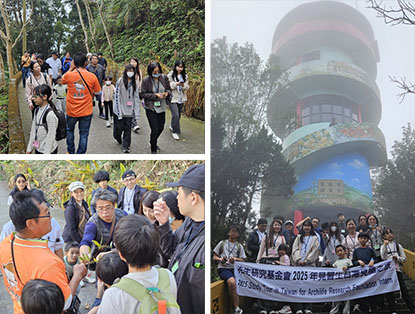 體驗結束後,一行人步行前往瞭望台,導覽人員介紹,此地位於關刀山脈,因東西向地勢形成氣候分界,在冷熱交替的季節常可見雲霧繚繞與壯麗雲海,因此吸引許多攝影愛好者前來,只為捕捉那如夢似幻的景致;沿途亦解說桐花步道周邊植物,如杏花、薑黃及馬告等,供眾人近距離嗅聞與品嚐,可惜大家登至瞭望台時天候不佳,僅見四周白霧瀰漫,未能遠眺景色。至此,本日活動已近尾聲,大家亦期待日後再訪,有機會與真正的雲海美景同框留念。 體驗結束後,一行人步行前往瞭望台,導覽人員介紹,此地位於關刀山脈,因東西向地勢形成氣候分界,在冷熱交替的季節常可見雲霧繚繞與壯麗雲海,因此吸引許多攝影愛好者前來,只為捕捉那如夢似幻的景致;沿途亦解說桐花步道周邊植物,如杏花、薑黃及馬告等,供眾人近距離嗅聞與品嚐,可惜大家登至瞭望台時天候不佳,僅見四周白霧瀰漫,未能遠眺景色。至此,本日活動已近尾聲,大家亦期待日後再訪,有機會與真正的雲海美景同框留念。Proceeding to the observation deck in the Guandao Mountain Range, the tour guide explained that the area's climate is influenced by terrain that runs in an east–west direction. During seasonal transitions between warm and cold weather, the area is often shrouded in mist and clouds. Such stunning scenery attracts many photographers who come here solely to capture the dreamlike sea of clouds. Along the tung flower path, everyone could smell and taste plants such as apricot blossoms, turmeric, and makauy. Regretfully, when the group reached the observation deck, poor weather and heavy mist obscured the distant view. Everyone hoped to visit again in the future and have the chance to take photos with the sea of clouds. |
