Sketch of Archilife Study Tour, August 2026Date: 2026-09-12
Section: Activity | 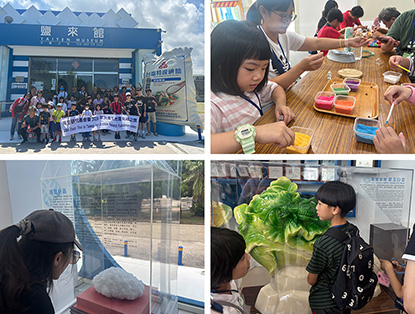 2026年8月29日由呂明澐小姐帶領30位見習生及其家長們,至苗栗進行鹽之味與雕磚編草賞趣之旅。首站來到位於通霄鎮的臺鹽通霄鹽來館,一抵達館外,便可見巨大的鹽袋模型高高矗立,其外觀與市售碘鹽包裝如出一轍,格外吸睛。導覽人員首先帶領眾人體驗製作七彩鑰匙圈,利用吸管將不同顏色的鹽粒分層裝入星星造型鹽罐中,見習生們手腦並用,細心搭配出獨一無二的色彩組合,導覽人員也從眾人手中的鹽粒延伸介紹鹽的來源與製程,帶領大家進一步認識人類取鹽方式的演變。相傳遠古時期獵人「夙沙」偶然發現海水經煮乾後可得到鹽,後世尊其為「鹽宗」,隨著製鹽科技日新月異,如今通霄精鹽廠採用離子交換膜電透析製鹽法,自海水中取得氯化鈉並去除雜質。眾人隨後觀賞館內展示的曬鹽結晶,還驚喜發現造型神似故宮翠玉白菜的鹽雕作品,體會鹽除了日常調味外,亦能化身藝術創作素材,展現多元面貌。
For the study tour on August 29, 2026, Ms. Lu Ming-yun led 30 ARF interns and their parents on a trip to discover salt, brick sculpting, and grass weaving in Miaoli. At Tongxiao Township's Taiyen Museum, a realistic model of a gigantic pack of iodized salt stood outside and caught everyone's attention. During the DIY session to make rainbow-colored keychains, interns used drinking straws to layer colorful salt grains in star-shaped jars, creating unique color combinations. Everyone learned about the origin and production of salt, and the evolution of salt-making methods. According to legend, the ancient hunter Su Sha discovered salt by boiling seawater dry and is thus revered as the "ancestor of salt." Today, Tongxiao Salt Factory uses ion-exchange membrane electrodialysis to extract sodium chloride from seawater and remove impurities. While viewing salt crystal exhibits, everyone was surprised to find a salt sculpture that resembled the Jadeite Cabbage at the National Palace Museum, realizing that salt is not only an everyday condiment but also a material for artistic creations.
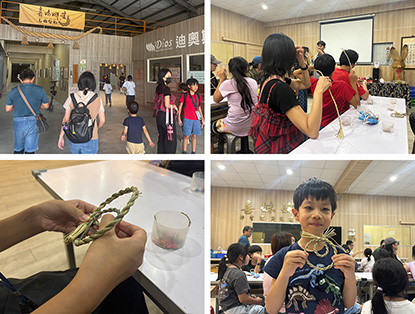 第二站來到位於公館鄉的喜妹娜哇稻草藝品館。「喜妹娜哇」為日文「注連繩」的音譯,在日本文化中常見於神社鳥居或新年祈福掛飾,具有祈福、避邪等象徵意涵。藝品館第二代傳人蔡景騰先生帶領大家製作注連繩,將事先編妥的稻草彎成雙圓形,再運用熱熔膠黏上喜愛的裝飾物。眾人一邊動手製作,一邊聽其介紹製作注連繩須選用尚未結穗的青嫩稻草,其收購價格與稻米相同,再經烘乾、輾壓及手工編織等工序;如今熟悉此技藝者已不多,成品品質甚至會受編織者當下心情影響,因此收貨時也得讓對方保持好心情,才能期待下回拿到好作品,在輕鬆有趣的解說與實作過程中,眾人也更能體會傳統工藝製作與傳承的不易。除注連繩外,館內亦展示許多稻草編織作品,從時下流行的動畫人物,到兔子、牛隻等動物造型皆栩栩如生,精巧技藝令眾人大開眼界。
The second stop of the tour was the Shimenawa Straw Craft Museum in Gongguan Township. Shimenawa refers to sacred straw ropes commonly hung at Shinto shrines and torii gates, or used as Japanese New Year decorations, to bring good fortune and ward off evil. The museum's second-generation craftsman, Mr. Tsai Ching-teng, led everyone in making shimenawa, shaping braided straw into double loops and attaching decorations with hot glue. Everyone learned that shimenawa uses young, unheaded rice straw, priced the same as rice. The straw is dried, flattened, and hand-braided. Few people remain skilled in the craft, and the quality of their work can depend on their mood. Keeping weavers happy helps ensure future quality. Through lively explanations and hands-on activities, everyone appreciated the challenges of preserving traditional craftsmanship. Besides shimenawa, the museum also showcases lifelike straw-woven works, from popular anime characters to rabbits and cattle, impressing everyone with the intricate craftsmanship.
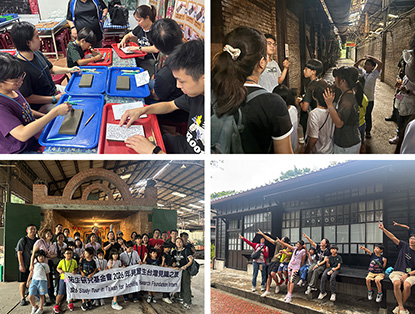 結束編草工藝體驗,下一站來到位於苑裡鎮的金良興觀光磚廠,了解苗栗紅磚產業的發展與沿革。眾人首先進行磚雕體驗,運用工具在磚胚上一筆一畫刻出喜愛的圖案,再交付廠方統一燒製,在導覽人員的帶領下前往磚瓦文物館參觀,苗栗具備適合製磚的自然條件,過去可利用火炎山地區的風化頁泥岩作為原料,如今亦能將水庫淤泥再利用,製成紅磚。隨後眾人走入燒製紅磚的隧道窯,金良興擁有苗栗早期建置的隧道窯,窯體長達162公尺,紅磚由台車送入窯內,依序經過「預熱帶」、「燒成帶」及「冷卻帶」,完成燒製即可成為建材、器皿或工藝作品。結束磚廠參訪,眾人前往鄰近的山腳國小日治後期宿舍群,透過解說認識其於1937年至1941年間興建的歷史背景。經過一日的苗栗走訪,見習生與家長們在寓教於樂中感受苗栗多元而豐富的地方產業與文化風貌。
At the next stop, the JLS Brick Museum in Yuanli Township, everyone learned about the development and history of Miaoli's brick industry. During the DIY session, participants carved their favorite designs into unfired bricks, which were later sent for firing. A guided museum tour revealed that eroded mudrock from Miaoli's Huoyan Mountain area has long been used to make bricks; today, reservoir silt can also be recycled for brickmaking. At the factory's 162m-long tunnel kiln, bricks are carried by carts through the "preheating zone", "firing zone" and "cooling zone", to become construction materials, utensils and craftwork. Later, everyone proceeded to the nearby Japanese-era dormitories at Shanjiao Elementary School, built between 1937 and 1941, and learned about their historical background. The interns and parents ended their Miaoli tour with rewarding insights into diverse local industries and culture.
|
|