Sketch of Public Policy Communion, October 2025Date: 2025-11-28
Section: Activity | 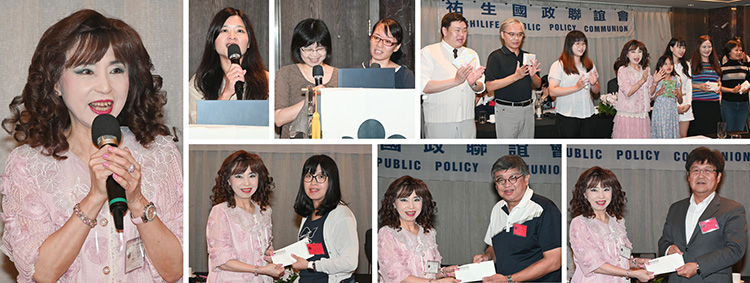
本會於2025年10月19日假台北喜來登大飯店地下二樓喜廳舉行「祐生國政聯誼會」。由主持人黃晉英秘書長宣布後揭開當日活動序幕,在輕鬆、活潑的節目之下,隨即由主持人帶來重要訊息:「美國總統川普希望結束俄烏戰爭,但印度持續向俄羅斯採購石油與武器,間接提供其資金來源,為此,美國除了向印度祭出高關稅外,也修改H-1B高技能工作簽證規定,要求新申請者每次支付10萬美元簽證費,鼓勵企業優先聘用美國人。在全球地緣政治中,台灣占有一席之地,不僅是印太重要戰略樞紐,也是全球半導體產業核心。面對複雜局勢,台灣應持續強化國防,確保安全與穩定。另外,祐生除了發展共生數位,持續朝向國際化前進,亦培養所有祐生成員都能全方位的成長,也期望透過生活特組的研討成果,能指引人類文明的新方向。」
The October Archilife Public Policy Communion of 2025 was held on October 19, 2025. After a series of relaxing and fun activities, Secretary General Huang Chin-ying made the following announcement, "U.S. President Donald Trump hopes to end the Russia–Ukraine War, but India's continued purchases of petroleum and weapons from Russia have directly provided the country with funding sources. In light of this, the United States has not only increased tariffs but has also changed the regulations on the H-1B Visa (Specialty Occupations), requiring new applicants to pay US$100,000 in visa fees, to encourage businesses to prioritize hiring Americans. In terms of global geopolitics, Taiwan is not only a significant strategic hub but also the center of the global semiconductor industry. In the face of a complex situation, Taiwan should strengthen its national defense to ensure security and stability. In addition to developing digital symbiosis, Archilife is moving forward with internationalization and nurturing all of its members for overall growth. The results of Archilife Living Special Team are also expected to pave a new direction for human civilization."
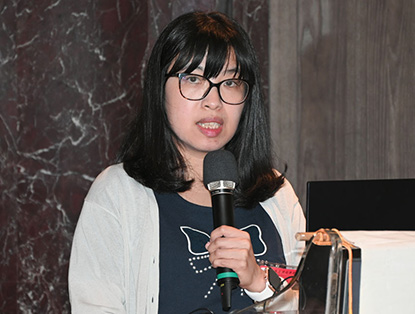 緊接著進行專題演講,由生活特組組長鄭瑋寧小姐進行「生活特組2025年上半年研究成果報告」。主講人首先表示2025年上半年,世界充滿不確定性與挑戰,但同時蘊藏著創新與轉型的機會。氣候異變迫使我們重新審視人與自然的關係;AI與新科技推動產業轉型,同時要求更嚴謹的治理;智慧生活帶來便利與幸福,亦提醒我們需正視精神文明的價值;而世代挑戰與星際探索更讓我們意識到人類文明的未來,取決於我們今天的選擇。主講人最後表示,唯有尋求物質與精神的平衡,促進科技與人文的融合,勇於承擔世代責任與積極探索星際,人類才能邁向更永續、更幸福的未來。 緊接著進行專題演講,由生活特組組長鄭瑋寧小姐進行「生活特組2025年上半年研究成果報告」。主講人首先表示2025年上半年,世界充滿不確定性與挑戰,但同時蘊藏著創新與轉型的機會。氣候異變迫使我們重新審視人與自然的關係;AI與新科技推動產業轉型,同時要求更嚴謹的治理;智慧生活帶來便利與幸福,亦提醒我們需正視精神文明的價值;而世代挑戰與星際探索更讓我們意識到人類文明的未來,取決於我們今天的選擇。主講人最後表示,唯有尋求物質與精神的平衡,促進科技與人文的融合,勇於承擔世代責任與積極探索星際,人類才能邁向更永續、更幸福的未來。
Next on the schedule was the keynote speech. First, Ms. Cheng Wei-ning presented a speech on the "Archilife Living Special Team's Research Result Report for the First Half of 2025." The speaker stated that in the first half of 2025, the world was filled with uncertainty and challenges, as well as opportunities for innovation and transformation. Climate change has compelled us to reconsider the relationship between humans and nature. AI and new technology accelerate industrial transformation while necessitating stricter governance. Smart living has brought us convenience and happiness while also reminding us of the importance of spiritual civilization. Meanwhile, generational challenges and interstellar exploration heighten our awareness of the future of human civilization, which is dependent on our decisions today. Finally, the speaker stated that only by seeking a balance between materialism and spirituality can the fusion of technology and the humanities be facilitated. Only by bravely accepting generational responsibility and actively exploring interstellar space can humanity progress toward a more sustainable and blissful future.
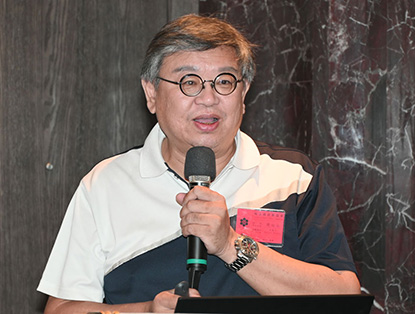 接著由國政委員周伯丞先生主講「屏東流域的故事」。主講人首先介紹屏東地區分布的溪流,而在其中的原住民部落,透過保留傳統文化特色,以「會呼吸的排灣族石板屋」奪下國際大獎。而在八八風災後,屏東縣政府推動大潮州人工湖計畫,旨在增加地下水資源、減緩地層下陷及防洪減災。主講人接著提到林邊溪上游建於日治時期的二峰圳,興建完成至今,每日供應豐沛不絕的水源,灌溉屏東平原。而林邊溪中游有著「林後四林平地森林園區」,在穩定的環境中持續保水;林邊溪下游則有建功地下伏流水示範場、養水種電以及佳冬塭豐海水抽水站。主講人期望能藉由減緩與調適,達成永續的目標。 接著由國政委員周伯丞先生主講「屏東流域的故事」。主講人首先介紹屏東地區分布的溪流,而在其中的原住民部落,透過保留傳統文化特色,以「會呼吸的排灣族石板屋」奪下國際大獎。而在八八風災後,屏東縣政府推動大潮州人工湖計畫,旨在增加地下水資源、減緩地層下陷及防洪減災。主講人接著提到林邊溪上游建於日治時期的二峰圳,興建完成至今,每日供應豐沛不絕的水源,灌溉屏東平原。而林邊溪中游有著「林後四林平地森林園區」,在穩定的環境中持續保水;林邊溪下游則有建功地下伏流水示範場、養水種電以及佳冬塭豐海水抽水站。主講人期望能藉由減緩與調適,達成永續的目標。
Next, Mr. Chou Po-cheng spoke on "Narrative of the Pingtung River Basin." The speaker began by introducing the various streams that run throughout Pingtung. In particular, an indigenous tribe in the area won an international award through "The Breathing Slate Houses of the Paiwan Tribe" that retains the traditional cultural characteristics. After Typhoon Morakot, the Pingtung County Government promoted the "Big Chaozhou Man-made Lake Project." The aim was to increase underground water resources, alleviate land subsidence, prevent floods, and reduce disasters. The speaker went on by stating that the Erfeng Canal, built on the upper Linbian River during the Japanese colonial period, has provided a bountiful daily water supply to irrigate the Pingtung Plain since its completion. The "Linhousilin Flatland Forest Park" is located in the middle stream of the Linbian River, which retains water continuously in stable environments. There is an underground water demonstration site, a water conservation project for hydroelectric power generation, and the Jiadong Wenfeng Seawater Pumping Station. The speaker wished to achieve the goal of sustainability through mitigation and adaptation.
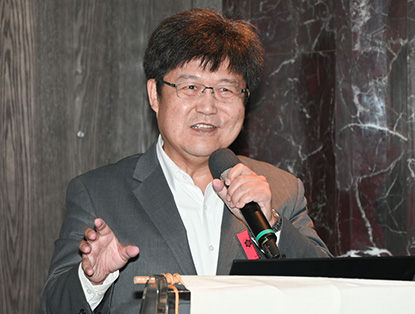 接著由國政委員林裕益先生主講「翡翠水庫管理新思維」。主講人首先表示接任翡翠水庫局長之後,將管理範圍擴大,上至集水區源頭,下至淡水河出海口,以做到全方位的掌握水情。主講人說明為因應氣候變遷及翡翠水庫永續優質經營,推動兩主軸:集水區保育治理及大壩維護管理,內含四策略:減緩淤積、水質維護、結構延壽及基礎穩定。而翡翠水庫極為重要的功能為「蓄洪防災」,於汛期預降水位,調控20%~30%庫容,降低水患風險。主講人也特別提到翡翠水庫為全台唯一無優養化之水庫,讓北部地區600萬人享有優質水源。 接著由國政委員林裕益先生主講「翡翠水庫管理新思維」。主講人首先表示接任翡翠水庫局長之後,將管理範圍擴大,上至集水區源頭,下至淡水河出海口,以做到全方位的掌握水情。主講人說明為因應氣候變遷及翡翠水庫永續優質經營,推動兩主軸:集水區保育治理及大壩維護管理,內含四策略:減緩淤積、水質維護、結構延壽及基礎穩定。而翡翠水庫極為重要的功能為「蓄洪防災」,於汛期預降水位,調控20%~30%庫容,降低水患風險。主講人也特別提到翡翠水庫為全台唯一無優養化之水庫,讓北部地區600萬人享有優質水源。
Next, Mr. Lin Yu-yi spoke on "A New Mindset for Feitsui Reservoir Management." The speaker first stated that after taking over as director of the Feitsui Reservoir Administration, the management scope was expanded to include the catchment area's source as well as the estuary of the Tamsui River in order to fully monitor the water situation. In response to climate change and to ensure sustainable, high-quality management of the Feitsui Reservoir, two measures were promoted: catchment conservation and governance, and dam maintenance, which comprise four strategies: reducing siltation, maintaining water quality, extending the structural lifespan, and ensuring foundation stability. The Feitsui Reservoir prioritizes flood storage and disaster prevention by lowering water levels during flood season, regulating storage capacity by 20–30%, and reducing flood risk. The speaker also mentioned that the Feitsui Reservoir is Taiwan's only reservoir free of eutrophication, providing six million people in the northern region with high-quality water resources.
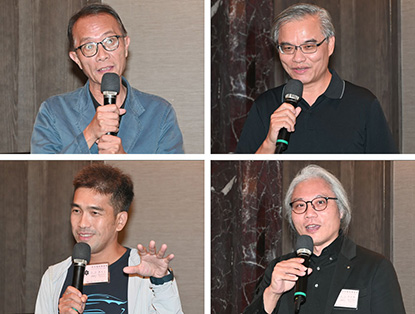 演講完畢,黃晉英秘書長代表基金會致贈謝禮予主講人。接著在與會者紛紛利用「餵豬時間」提出個人意見與看法交流後,圓滿地結束十月份國政聯誼會。 演講完畢,黃晉英秘書長代表基金會致贈謝禮予主講人。接著在與會者紛紛利用「餵豬時間」提出個人意見與看法交流後,圓滿地結束十月份國政聯誼會。
After the speech, Secretary General Huang Chin-ying presented a gift to the speakers on behalf of the foundation. Then, attendees expressed and exchanged their opinions and views during the piggy hour. The October Archilife Public Policy Communion ended smoothly.
|
|